
Can Diabetes Cause Itchy Feet or Neuropathy Symptoms? Understanding the Connection and What to Watch For
Can Diabetes Cause Itchy Feet or Neuropathy Symptoms? Understanding the Connection and What to Watch For
Diabetes is a chronic condition that affects millions of people worldwide, and its complications can impact nearly every part of the body—including the feet. If you have diabetes and notice persistent itching or unusual sensations like tingling, burning, or numbness in your feet, you may be experiencing signs of diabetic neuropathy or skin-related issues associated with high blood sugar. Understanding why this happens can help you take steps to protect your foot health.
Why Diabetes Can Make Feet Itchy
One common reason people with diabetes experience itchy feet is dry skin. High blood sugar levels can cause the body to lose fluids, leading to dehydration and dryness. When the skin becomes dry, it can crack, flake, and itch. This problem can be worse in the feet, where the skin is naturally thicker and often exposed to pressure and friction from shoes.
Another cause is fungal infections, such as athlete’s foot (tinea pedis). People with diabetes may have a weakened immune response, making them more prone to infections that can lead to redness, itching, and irritation between the toes or on the soles.
Diabetes and Neuropathy Symptoms
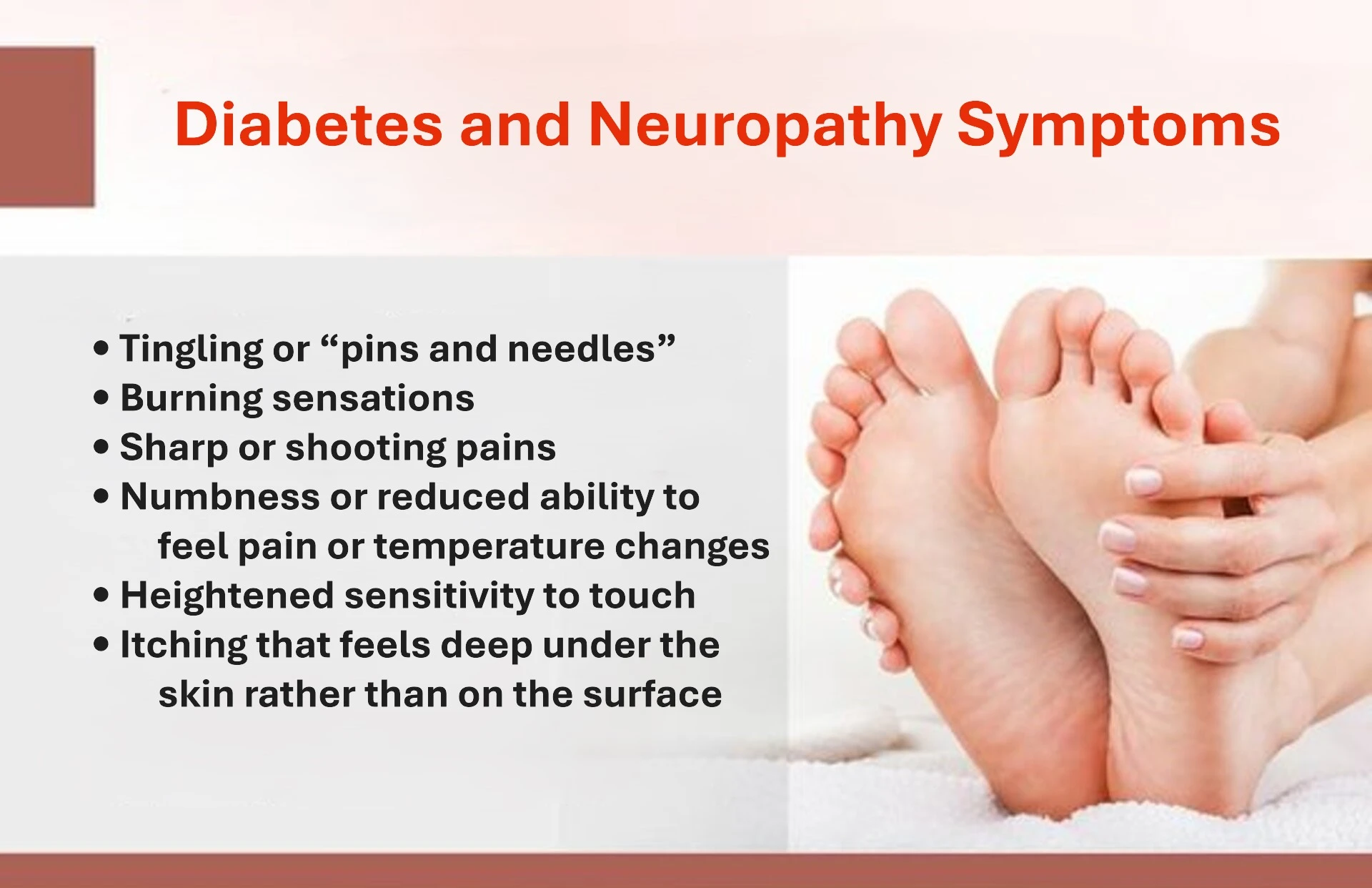
Beyond simple dryness and infections, diabetes can also lead to a condition called peripheral neuropathy. This is nerve damage that typically affects the legs and feet first. Neuropathy can cause a variety of uncomfortable sensations, including:
-
Tingling or “pins and needles”
-
Burning sensations
-
Sharp or shooting pains
-
Numbness or reduced ability to feel pain or temperature changes
-
Heightened sensitivity to touch
-
Itching that feels deep under the skin rather than on the surface
These symptoms occur because high blood sugar over time damages the small blood vessels that supply nerves, leading to nerve dysfunction.
Why These Symptoms Matter
Itchy feet might sound harmless, but for people with diabetes, scratching can break the skin and create entry points for bacteria. Coupled with neuropathy, which can reduce sensation and delay noticing injuries, this increases the risk of infections, ulcers, and even serious complications like gangrene if wounds go untreated.
Recognizing the early signs of neuropathy and skin problems is crucial for preventing more severe issues. If you notice persistent itching, numbness, burning, or changes in the appearance of your feet (such as color changes or sores that won’t heal), it’s important to see a healthcare professional.
Tips for Managing Itchy Feet and Neuropathy Symptoms
-
Keep blood sugar under control: Stable blood sugar helps prevent further nerve damage and skin problems.
-
Moisturize daily: Use fragrance-free moisturizers to keep skin hydrated, but avoid putting lotion between the toes to prevent excess moisture buildup.
-
Check your feet every day: Look for redness, cracks, cuts, or blisters you might not feel due to neuropathy.
-
Wear comfortable, well-fitting shoes and clean socks: This helps reduce pressure and friction, lowering the risk of injury.
-
Avoid hot water: Use lukewarm water for washing to prevent burns if you have reduced sensation.
-
Seek medical care promptly: See your doctor or podiatrist for persistent itching, pain, numbness, or sores.
In summary, diabetes can definitely cause itchy feet and neuropathy symptoms. Staying aware of these signs and practicing good foot care can help you manage discomfort and prevent serious complications. Regular checkups and early intervention remain key to protecting your foot health.
Related Blog
What Causes Oily Skin and Can It Be Managed Naturally? Exploring Root Causes and Gentle Solutions
Aug 2, 2025 by Admin
General
What Are the Signs That You Have Sensitive Skin? Key Symptoms to Help You Identify This Delicate Skin Type
Aug 1, 2025 by Admin
General